New Energy Dividend Mandate Seeks to Resolve Data Center Tensions
The administration proposes that AI infrastructure builders share surplus power costs with local residents to mitigate rising utility bills and community opposition.
By Imani Brooks ·
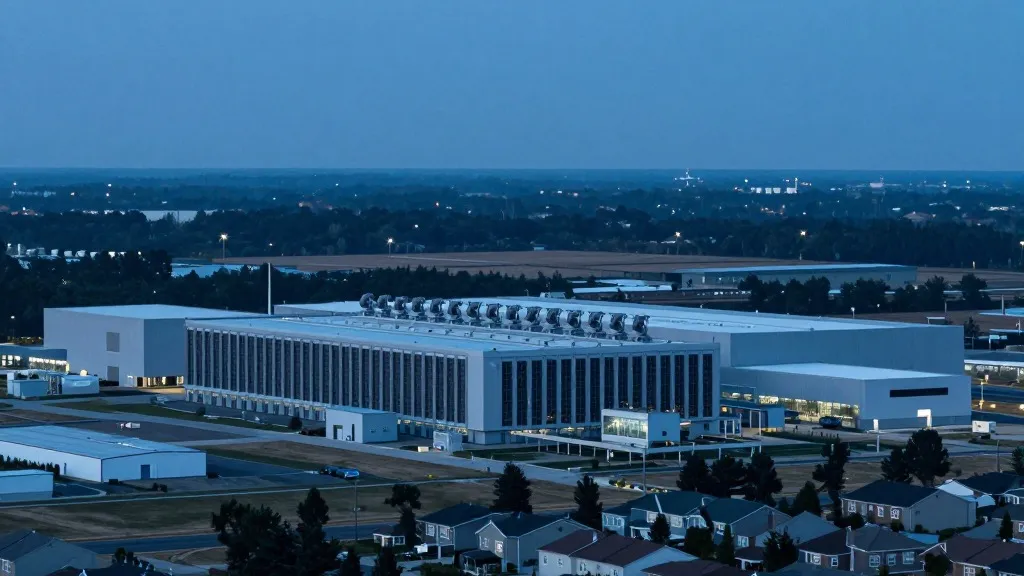
A significant friction point between the rapid expansion of artificial intelligence infrastructure and the local populations hosting these facilities has prompted a new executive directive. The core tension lies in the disparity between the massive resource consumption of data centers and the tangible burden placed on nearby neighborhoods. To address this divide, President Donald Trump has called for a mandatory financial arrangement where data center operators provide a direct benefit to the communities they impact. This initiative aims to transform a source of local resentment into a more acceptable, even welcomed, presence by ensuring that the costs of energy consumption are not solely borne by residential ratepayers.
The specific mechanism proposed involves data center builders and major AI hyperscalers paying a dividend to local communities. This payment is designed to counteract the increase in electricity prices that often accompanies the construction of large scale computing facilities. In some cases, the administration suggests that these payments could even lower overall energy costs for residents. The directive builds upon previous orders requiring these entities to generate their own electricity rather than relying entirely on the existing public grid. By managing their own power supply, operators can now be required to give or sell excess energy back to the local area, creating a direct financial link between the facility and its neighbors.
Local communities across the United States have frequently protested the arrival of AI data centers. These objections are rooted in the outsized impact these facilities have on daily life. Residents often cite rising electricity costs, noise pollution, water shortages, and air pollution as primary grievances. Additionally, concerns regarding deforestation and general ecological strain have become common talking points in town hall meetings and local planning sessions. The proposed dividend is intended to alleviate these specific pain points, particularly the financial burden of higher utility bills that affect many homes in the immediate vicinity of new builds.
The Trump administration views this move as a strategic step in the broader artificial intelligence arms race with China. By making data centers more palatable to local populations, the government hopes to accelerate construction timelines and secure a competitive edge. The administration is also keen to win back favor by ensuring that the companies driving this technological boom contribute something tangible to the affected areas. While the practical implementation of these payments remains to be seen, the focus on electricity suggests that the dividend may take the form of partial reimbursement for rising energy costs. This approach aligns with a recently passed act that orders data centers to shoulder the costs of grid upgrades, preventing these expenses from being absorbed by local tax revenue.
President Trump emphasized the financial incentive for cooperation in a post on Truth Social. He noted that data centers which were initially highly unpopular in certain areas have become extremely popular once a financial deal was struck. The President urged industry leaders to make these deals and get the projects built, indicating a clear desire to remove local opposition as a barrier to expansion. This rhetoric frames the energy dividend not just as a community benefit, but as a key to unlocking faster deployment of critical AI infrastructure.
However, the effectiveness of this financial incentive remains a subject of debate. While the economic aspect is a crucial facet of the problem, it is not the only one. Significant challenges remain, including enormous water consumption, ecological damage, and various forms of pollution. These environmental factors continue to make AI data centers a difficult sell in many locations. A payment for energy does not directly resolve issues of water usage or air quality, meaning that community resistance may persist despite the new financial arrangements.
The term dividend itself introduces complexity into the discussion. In traditional corporate terms, dividends are paid when a company is profitable. Many new data center builds are likely to be in a construction or early operational phase where costs are high and profits are not yet realized. This raises questions about the timing and sustainability of the payments. Critics argue that without strict requirements, companies may have little incentive to go beyond the path of least resistance, potentially offering minimal benefits that do not fully address community concerns.
Furthermore, the type of power generation used in the short term is primarily gas powered generators, which can be noisy and inefficient. For residents living very close to these facilities, the local impact of these generators may outweigh the financial benefit of the dividend. Other forms of power generation, such as renewable sources, take longer to come online, suggesting that the energy dividend may not be a near term fix for all local issues. The administration faces the challenge of balancing immediate financial relief with long term environmental and operational goals.
Ultimately, the success of this mandate will depend on how well the financial deals are structured and enforced. If the dividends are perceived as token gestures, they may do little to change public opinion. However, if they provide substantial relief to household budgets, they could serve as a model for future infrastructure projects. The coming months will reveal whether this approach can successfully navigate the complex relationship between technological advancement and local community well being.
Source: Tom's Hardware